Why INT2ACT?
To me, the transcriptome is the functional voice of the genome, a vast and dynamic collection of RNA molecules, both coding and noncoding, that bring genetic information to life. While not every transcript has a defined function, together they form a complex and modular network that challenges our understanding of gene regulation. Their ability to adapt, interact, and sometimes even break the classical rules of biology makes transcriptomics one of the most fascinating frontiers in molecular science.
What excites me most about the INT2ACT project is the opportunity to explore this intricate landscape and to develop innovative methods that can capture RNA molecules in their native forms. By combining cutting edge technology with interdisciplinary collaboration, we can uncover interactions and regulatory mechanisms that conventional sequencing has long overlooked, bringing new clarity and depth to the field of transcriptomics.
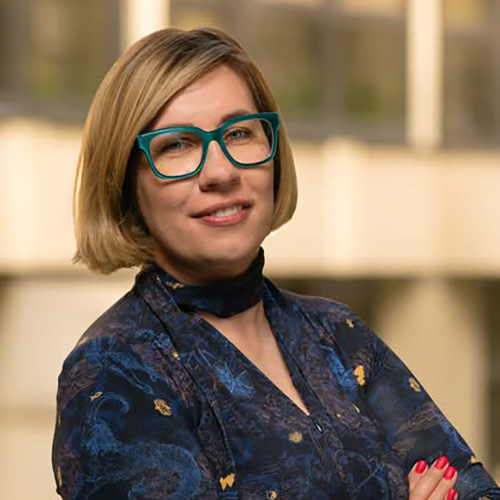
Dr. Barbara Uszczynska-Ratajczak
Supervisor of DC6
Co-supervisor of DC2, DC5, DC7, DC8 and DC12

Dr. Barbara Uszczynska-Ratajczak is an Associate Professor at the Institute of Bioorganic Chemistry Polish Academy of Sciences in Poznań, Poland.
Our research explores the fascinating world of long noncoding RNAs (lncRNAs), a vast and largely uncharted component of the genome once dismissed as transcriptional noise. We aim to uncover how these molecules regulate fundamental biological processes, shape development, and contribute to human disease.
By combining bioinformatics, molecular biology, and genomics, we develop innovative strategies to identify, annotate, and characterize lncRNAs across species. Using the zebrafish as a powerful vertebrate model, we investigate the evolutionary conservation, regulation, and posttranscriptional processing of lncRNAs during early embryogenesis, particularly throughout the Maternal to Zygotic Transition.
Our goal is to build a comprehensive understanding of lncRNA biology, from sequence and structure to function, and to expand their potential as biomarkers and therapeutic targets in health and disease.
I have always been fascinated by the transcriptome and its complex network of RNA molecules. Studying RNA combines computational analysis with hands-on experiments: we can explore ideas in data and then test them in living cells, revealing hidden regulatory mechanisms in real time. The chance to understand how these networks control cellular function and shape biology is what drives my research and fuels my passion.
I earned my Ph.D. in chemical sciences from the Institute of Bioorganic Chemistry, Polish Academy of Sciences, in 2013, following studies at Wrocław University of Technology and Adam Mickiewicz University in Poznań. I then joined the Centre for Genomic Regulation in Barcelona as a postdoctoral researcher in the group of Roderic Guigó, a leading figure in computational biology whose work has greatly advanced the fields of genomics and transcriptomics. During this time, I also became a member of the GENCODE project, contributing to the development of high-quality, evidence-based genome annotations for human and mouse.
In 2020, I established and began leading a computational biology group at the Institute of Bioorganic Chemistry PAS in Poznań. My research focuses on the annotation and functional characterization of vertebrate long noncoding RNAs, with a particular emphasis on the zebrafish model. I am dedicated to developing innovative high-throughput methods for full-length lncRNA annotation.
Kaur, G., Perteghella, T., Carbonell-Sala, S., Gonzalez-Martinez, J., Hunt, T., Mądry, T., Jungreis, I., Arnan, C., Lagarde, J., Borsari, B., Sisu, C., Jiang, Y., Bennett, R., Berry, A., Cerdán-Vélez, D., Cochran, K., Vara, C., Davidson, C., Donaldson, S., Dursun, C., González-López, S., Gopal Das, S., Hardy, M., Hollis, Z., Kay, M., Carlos Montañés, J., Ni, P., Nurtdinov, R., Palumbo, E., Pulido-Quetglas, C., Suner, MM., Yu, X., Zhang, D., Loveland, JE., Mar Albà, M., Diekhans, M., Tanzer, A., Mudge, JM., Flicek, P., Martin, FJ., Gerstein, M., Kellis, M., Kundaje, A., Paten, B., Tress, MJ., Johnson, R., Uszczynska-Ratajczak, B., Frankish, A., Guigó, R. (2024) GENCODE: massively expanding the lncRNA catalog through capture long-read RNA sequencing, bioRxiv. https://doi.org/10.1101/2024.10.29.620654
Carbonell-Sala, S., Perteghella, T., Lagarde, J., Nishiyori, H., Palumbo, E., Arnan, C., Takahashi, H., Carninci, P., Uszczynska-Ratajczak, B., Guigó, R. (2024) CapTrap-Seq: A platform-agnostic and quantitative approach for high-fidelity full-length RNA sequencing. Nature Communications, 15(1), 5278. https://doi.org/10.1038/s41467-024-49523-3
Lagarde, J.*, Uszczynska-Ratajczak, B.*, Carbonell-Sala, S., Perez-Lluch, S., Abad, A., Davis, C., Gingeras, T., Frankish, A., Harrow, J., Guigó, R., Johnson, R. (2017) High-throughput annotation of full-length long noncoding RNAs with capture long-read sequencing. Nature Genetics, 49(12), 1731-1740. https://doi.org/10.1038/ng.3988
Lagarde, J.*, Uszczynska-Ratajczak, B.*, Santoyo-Lopez, J., Manuel Gonzalez, J., Tapanari, E., Mudge, JM., Steward, C., Wilming, L., Tanzer, A., Howald, C., Chrast, J., Vela-Boza, A., Rueda, A., Lopez-Domingo, FJ., Dopazo, J., Reymond, A., Guigó, R., Harrow, J., (2016) Extension of human lncRNA transcripts by RACE coupled with long read high-throughput sequencing (RACE-Seq). Nature Communications, 17(7), 12339. https://doi.org/10.1038/ncomms12339