
Why INT2ACT?
The discovery of the double-helix structure of DNA more than 70 years ago represented a milestone in biology. Since then, numerous studies and breakthroughs have significantly expanded our understanding of cell biology and the fundamental mechanisms of life. Progress in molecular biology, however, has always been closely linked to technological advances, which have continuously enhanced our capacity for study and analysis.
With this vision, I established the INT2ACT consortium, an international network of academic and industrial partners, with the objective of bringing together researchers specialized in nucleic acid studies to develop novel technologies and methodologies in biosensing, sequencing, modification, identification of new target genes, and nucleic acid delivery, while at the same time training 15 Doctoral Candidates.
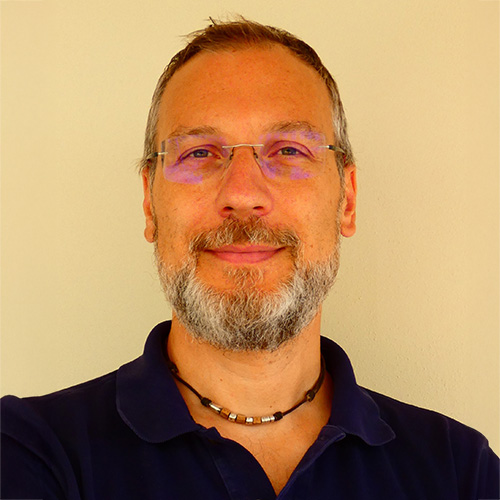
Dr. Carlo Vascotto
Project coordinator
Leader of WP7
Supervisor of DC8 and DC9
Co-supervisor of DC1, DC2, DC3 and DC15

Dr. Carlo Vascotto is an Assistant Professor of Molecular Biology at the University of Udine (UNIUD) within the Department of Medicine (DAME) in Udine, Italy.
His group investigates mitochondrial biology, with particular emphasis on mitochondrial DNA repair, RNA quality control, and mitochondrial/nuclear communication. They are interested in how cells maintain the integrity of their mitochondrial genome and transcriptome, and how these processes are linked to cancer biology and potential therapeutic strategies. Dr. Vascotto participates in international collaborations and EU-funded projects such as OLIGOMED, MITGEST and ON-TRACT, which connect fundamental discoveries to translational applications.
As coordinator of the INT2ACT project, he responsible for overseeing the interaction and communication between the consortium partners and the European Research Executive Agency, ensuring compliance with project objectives and reporting requirements.
Since my student days, I have been fascinated by molecular biology and by how the development of new technologies can open unexpected paths leading to new discoveries. In 2003, just a year after my graduation, the Human Genome Project (HGP) was completed, providing for the first time a complete map of the human genome. The HGP took more than ten years, involved 20 institutions across six countries, and cost nearly three billion dollars. Today, sequencing a human genome costs around six hundred dollars! This dramatic reduction in cost exemplifies how technological advances can, within just a few decades, open scenarios that were once unimaginable, allowing us to look beyond the horizon and explore new frontiers of knowledge.
I hold a Master’s degree in Biological Sciences from the University of Trieste and a PhD in Biomedical and Biotechnological Sciences from the University of Udine, where I investigated cellular responses to oxidative stress. During my doctoral studies, I trained abroad as a visiting student at the MRC Human Genetics Unit in Edinburgh and at the University of Texas Medical Branch in Galveston. Following my PhD, I pursued postdoctoral research in Udine and was awarded a Fulbright Research Fellowship to work in the laboratory of Prof. Mark Kelley at Indiana University, USA. From 2017 to 2019, I was Visiting Professor at the Center of New Technologies, University of Warsaw, supported by a Marie Skłodowska-Curie fellowship, where I expanded my research on mitochondrial protein trafficking and stress-induced translocation of DNA repair proteins.
Since 2011 I hold a position as Assistant Professor of Molecular Biology at the University of Udine.
- Bazzani V, Kundnani DL, Redin ME, Agostini F, Chhatlani K, Faini AC, Poziemski J, Baccarani U, Siedlecki P, Deaglio S, Storici F, Vascotto C. (2025) Characterization of a new mutation of mitochondrial ND6 gene in hepatocellular carcinoma and its effects on respiratory complex I. Sci Rep. 15(1):10925. https://www.nature.com/articles/s41598-025-91746-x
- Xu P, Yang T, Kundnani DL, Sun M, Marsili S, Gombolay AL, Jeon Y, Newnam G, Balachander S, Bazzani V, Baccarani U, Park VS, Tao S, Lori A, Schinazi RF, Kim B, Pursell ZF, Tell G, Vascotto C, Storici F. (2024) Light-strand bias and enriched zones of embedded ribonucleotides are associated with DNA replication and transcription in the human-mitochondrial genome. Nucleic Acids Res. ;52(3):1207-1225. https://academic.oup.com/nar/article/52/3/1207/7481827
- >Barchiesi A, Bazzani V, Jabczynska A, Borowski LS, Oeljeklaus S, Warscheid B, Chacinska A, Szczesny RJ, Vascotto C. (2021) DNA Repair Protein APE1 Degrades Dysfunctional Abasic mRNA in Mitochondria Affecting Oxidative Phosphorylation. J Mol Biol. 433(18):167125. https://www.sciencedirect.com/science/article/pii/S0022283621003491?via%3Dihub
- Sbai O. et al. (2022), RAGE-TXNIP axis drives inflammation in Alzheimer’s by targeting Aβ to mitochondria in microglia. Cell Death Dis. 2022 Apr 4;13(4):302. Vascatto C. is co-author. DOI
- Barchiesi A. et al. (2021), DNA Repair Protein APE1 Degrades Dysfunctional Abasic mRNA in Mitochondria Affecting Oxidative Phosphorylation. J Mol Biol. Vol. 433, Iss.18, 3, 167125. Bazzani V. and Vascotto C. are co-authors. DOI
- Barchiesi A. et al. (2020), Mitochondrial Oxidative Stress Induces Rapid Intermembrane Space/Matrix Translocation of Apurinic/Apyrimidinic Endonuclease 1 Protein through TIM23 Complex. J Mol Biol. Volume 432, Issue 24, 166713. Bazzani V. and Vascotto C. are co-authors. DOI
- Barchiesi A. et al. (2015), Mitochondrial translocation of APE1 relies on the MIA pathway. Nucleic Acids Research, Volume 43, Issue 11, Pages 5451–5464. Vascotto C. is co-author. DOI
- Bazzani V. et al. (2020) Mitochondrial apurinic/apyrimidinic endonuclease 1 enhances mtDNA repair contributing to cell proliferation and mitochondrial integrity in early stages of hepatocellular carcinoma. BMC Cancer volume 20, Article number: 969. Vascotto C. is co-author. DOI
- Vascatto C. et al. (2014) Functional regulation of the apurinic/apyrimidinic endonuclease 1 by nucleophosmin: impact on tumor biology. Oncogene 33, 2876–2887. DOI