
Why INT2ACT?
What excites me about INT2ACT is its ability to combine advanced training in RNA technologies with a truly collaborative network of excellent laboratories, creating critical mass and overcoming institutional barriers to address complex biological and biomedical questions.
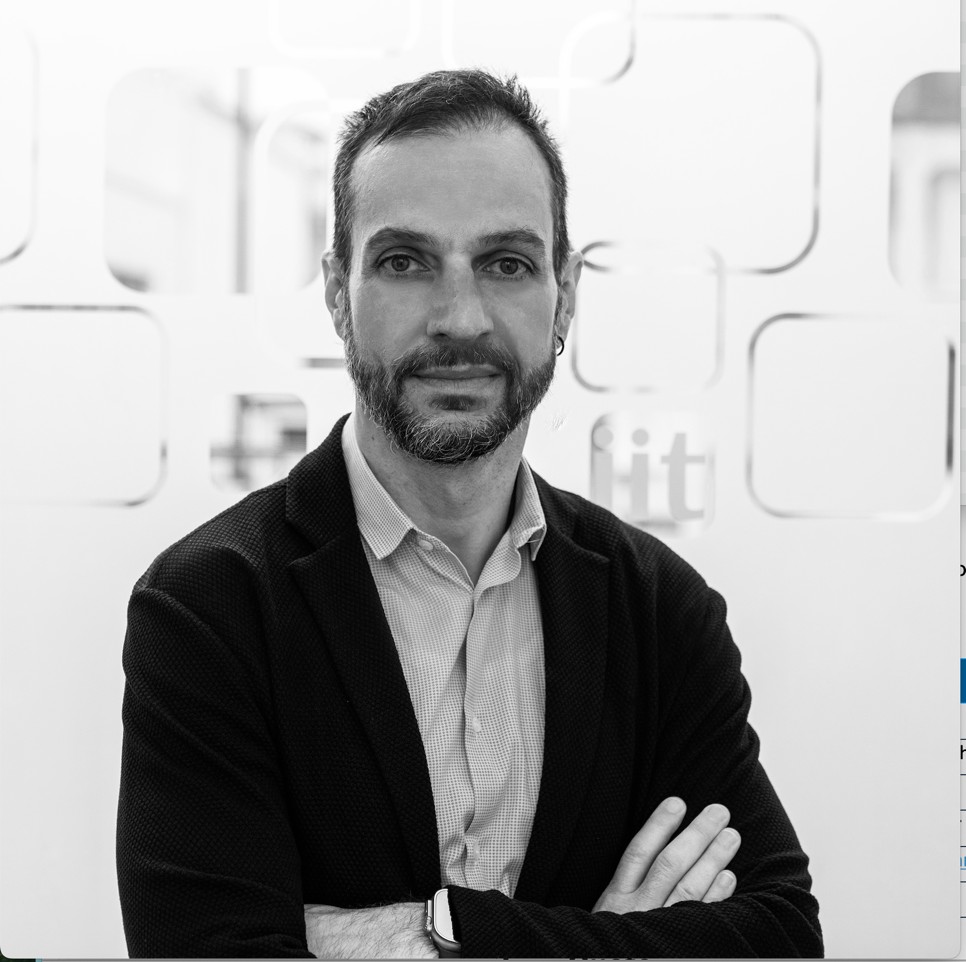

Dr. Francesco Nicassio is a Senior Researcher Tenured and Center Coordinator at the Istituto Italiano di Tecnologia in Genoa, Italy.
His research group operates as a “hybrid” laboratory that tightly integrates experimental and computational approaches to investigate the mechanisms governing genome function and gene expression. A central focus of their work is the interplay between coding and non-coding components of the transcriptome, and how regulatory RNAs contribute to gene expression dynamics in physiological and disease-relevant contexts. In this context, they develop and implement advanced omics technologies, including single-cell and long-read sequencing, with particular emphasis on native RNA sequencing and RNA modification profiling, to link regulatory complexity with biological and biomedical applications.
The laboratory is an active component of the IIT RNA Flagship programme, a coordinated effort across multiple IIT laboratories focused on RNA biology and RNA technologies, which Nicassio co-coordinates. The group maintains close collaborations with international research organisations including EMBL, EBI and Human Technopole. At the international level, the lab is part of the FANTOM6 consortium and is embedded in the broader long-read sequencing community, contributing to initiatives such as the RNome project and the COST Action on long-read transcriptomics. In addition, Nicassio is a co-founder of the Milan RNA Salon (RNA Society), fostering regular scientific exchange within the RNA research community.
I have been driven throughout my career by a deep curiosity for how biological information is translated into function, and by the belief that scientific research gains real value only when it is shared, discussed and put at the service of others. Beyond scientific questions, I strongly value collaboration, communication and mentoring, and I see the supervision of young researchers as a central and rewarding part of my role. Research is an intellectually demanding and often uncertain path, requiring resilience, openness and trust in teamwork. I believe that pursuing science with passion and integrity should leave a mark not only in terms of knowledge, but also in the people and communities it touches, within and beyond academia.
My scientific background is rooted in genomics and transcriptomics, with a long-standing focus on understanding gene regulation in cancer through the integration of experimental and computational approaches. Over the years, my work has contributed to uncovering fundamental mechanisms of microRNA biology, including the discovery and characterization of Target-Directed microRNA Degradation (TDMD), as well as to the development of circulating microRNA signatures with diagnostic potential in human cancer. More recently, my research has expanded toward multi-omic and single-cell approaches to study cancer evolution, spanning lineage tracing and integrative genomics, as exemplified by our work on the transcriptional, epigenetic and genetic determinants of cancer progression (Nadalin et al., 2024). In parallel, my laboratory has played an active role in advancing RNA sequencing technologies, particularly long-read and native RNA sequencing using Oxford Nanopore platforms, contributing analytical tools and benchmarking studies for RNA modification detection and transcriptome characterization. This activity is supported by competitive funding, including Investigator Grants from Italian Association for Cancer Research (AIRC), most recently awarded in 2025, and by participation in international training networks such as the MSCA Doctoral Network LongTREC focused on long-read sequencing. In addition, I contribute to national and international initiatives on sequencing and genomics, including as a member of the Italian mirror group for the 1+Million Genomes initiative.
- Nadalin F., Marzi M.J., Pirra Piscazzi M., Fuentes-Bravo P., Procaccia S., Climent M., Bonetti P., Rubolino C., Giuliani B., Papatheodorou I., Marioni J.C., Nicassio F. (2024) – Multi-omic lineage tracing predicts the transcriptional, epigenetic and genetic determinants of cancer evolution. -Nature Communications 15:7609 DOI: 10.1038/s41467-024-51424-4
- Maestri S., Furlan M., Mulroney L., Coscujuela Tarrero L., Ugolini C., Dalla Pozza F., Leonardi T., Birney E., Nicassio F. and Pelizzola M. (2024) – Benchmarking of computational methods for m6A profiling with Nanopore direct RNA sequencing. – Briefings in Bioinformatics 25(2):bbae001 DOI: 10.1093/bib/bbae001
- Giambruno R., Zacco E., Ugolini C., Vandelli A., Mulroney L., D’Onghia M., Giuliani B., Criscuolo E., Castelli M., Clementi N., Clementi M., Mancini N., Bonaldi T., Gustincich S., Leonardi T., Tartaglia G.G. and Nicassio F. (2023) – Unveiling the role of PUS7-mediated pseudouridylation in host protein interactions specific for the SARS-CoV-2 RNA genome. – Molecular Therapy – Nucleic Acids 34:102052 DOI: 10.1016/j.omtn.2023.102052
- Ugolini C., Mulroney L., Leger A., Castelli M., Criscuolo E., Williamson M.K., Davidson A.D., Almuqrin A., Giambruno R., Jain M., Frigè G., Olsen H., Tzertzinis G., Schildkraut I., Wulf M.G., Corrêa I.R., Ettwiller L., Clementi N., Clementi M., Mancini N., Birney E., Akeson M., Nicassio F., Matthews D.A., Leonardi T. (2022) – Nanopore ReCappable sequencing maps SARS-CoV-2 5′ capping sites and provides new insights into the structure of sgRNAs. – Nucleic Acids Research DOI: 10.1093/nar/gkac144
- Ghini F., Rubolino C., Climent M., Simeone I., Marzi M.J., Nicassio F. (2018) – Endogenous transcripts control miRNA levels and activity in mammalian cells by target-directed miRNA degradation. – Nature Communications 9:3119 DOI: 10.1038/s41467-018-05182-9
- Beck et al. (2023), Trimannose-coupled antimiR-21 for macrophage-targeted inhalation treatment of acute inflammatory lung damage. Nature Communications (2023) 14:4564 https://doi.org/10.1038/s41467-023-40185-1
- Montiel et al. (2024), Synthesis and validation of clickable multimeric mannose ligands for dendritic cell targeting Journal of Carbohydrate Chemistry Volume 43, Issues 7–9, 21 November 2024, Pages 323-348 https://doi.org/10.1080/07328303.2024.2418524